Ganesh Chaturthi Dance Tutorial in Hindi: Learn easy and energetic Deva Shree Ganesha dance steps…
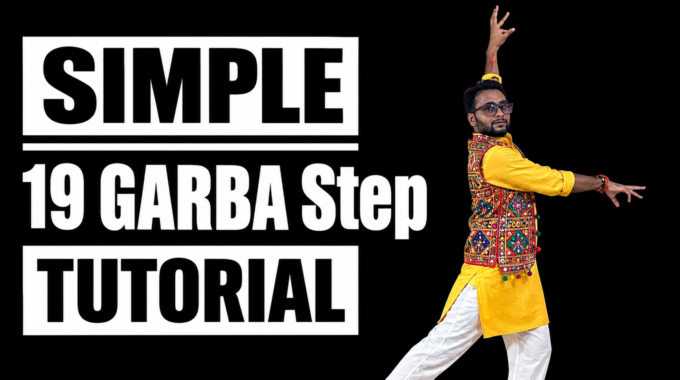
19 Garba Dance Steps for Beginners: Easy Garba Tutorial for Navratri 2026
Garba is more than a dance—it is a rhythmic circle tradition connected with Navratri, devotion, community and Gujarati culture. If you are searching for Garba dance steps for beginners, this tutorial gives you a practical starting point with 19 different movements that you can practice individually and later combine into a complete Garba routine.
In this 7-minute Garba dance tutorial, Indian Dance World instructor Vishal Sharma demonstrates beginner-friendly and traditional-inspired movements including Ek Tali, Do Tali, Teen Tali, Single Chutki, Double Chutki, Dodhiyu, Popat, Hudo, Hinch, Trikoniya, Star Step, Chakkar, Reverse Chakkar, Double Turn, Diagonal Cross Turn, Knee Dip, Hop & Twist, Leheriya and Mayur.
Watch the 19 Garba Dance Steps Tutorial
Dance Studio: Indian Dance World
Instructor: Vishal Sharma
Online Classes: 8285199212
If you are preparing for Navratri 2026, attending a Garba night, joining a college or community Garba event, or simply want to learn the basics at home, you can use this video as a step-by-step practice guide.
What Is Garba Dance?
Garba is a traditional dance form associated particularly with Gujarat and Navaratri. UNESCO describes Garba of Gujarat as a ritualistic and devotional dance performed around a central object such as a lit earthenware pot or an image associated with the divine feminine. Dancers traditionally move in a circle while clapping and singing, with the movement building in intensity.
The Government of India’s Sangeet Natak Akademi similarly describes Garba as a community practice performed across Gujarat during Navaratri and notes that it has also continued beyond the festival at social and cultural celebrations.
In simple terms, if you are a beginner, think of Garba as a combination of:
Footwork + rhythm + hand movements + clapping + circular movement + coordination.
Gujarati mein kahen to:
“ગરબા શીખવાનો સૌથી સારો રસ્તો છે — તાલ સાથે પગલાં અને હાથની મૂવમેન્ટને ધીમે ધીમે પ્રેક્ટિસ કરવી.”
19 Garba Dance Steps Covered in This Tutorial
The video moves from basic clap-based movements toward turns, dynamic steps and a final circle sequence.
- Ek Tali / Single Taali
Ek Tali, or single-clap Garba, is a useful starting point for beginners.
The focus is on coordinating a simple foot pattern with a single clap. Beginners should first practice the footwork slowly before trying to match a faster Garba song.
Related searches:
Ek Tali Garba
single Tali Garba
1 Tali Garba
basic Garba steps
simple Garba steps
- Do Tali / Double Taali
The next movement introduces a two-clap pattern.
Do Tali Garba can help beginners understand how hand movements and footwork work together. Keep your shoulders relaxed and concentrate on maintaining an even rhythm.
Related keywords:
Do Tali Garba, 2 Tali Garba, double clap Garba, Garba Tali steps.
- Teen Tali / Triple Taali
Teen Tali, or three-clap Garba, is one of the recognizable clap-based patterns associated with Garba practice.
Instead of trying to move quickly, beginners should focus on getting the three-clap rhythm and foot placement consistent.
Current Garba tutorial content also commonly groups Ek Tali, Do Tali and Teen Tali together when teaching foundational Garba steps.
- Single Chutki
The Single Chutki introduces finger-snapping into the Garba movement.
For beginners, the important part is not making a loud snap. It is maintaining the rhythm while coordinating the snap with the step.
- Double Chutki
The Double Chutki develops the previous movement with two rhythmic snaps.
Try this movement slowly first:
Step → snap → shift → snap
Then gradually increase the tempo.
- Dodhiyu Garba Step
Dodhiyu Garba is one of the traditional Garba terms beginners may encounter when searching for more structured Garba footwork.
Different tutorials and performance styles can present Dodhiyu with variations, so beginners should focus first on learning the specific sequence being demonstrated rather than assuming every Dodhiyu variation is identical.
Contemporary instructional material commonly presents Dodhiyu through forward/backward movement and circular progression.
Search terms:
Dodhiyu Garba steps
Dodhiya Garba
Dodhiyu Garba tutorial
Dodhiyu dance steps
easy Dodhiyu Garba
- Popat / Parrot Step
The Popat Garba step is another recognizable step name used in Garba tutorials.
“Popat” means parrot in Gujarati/Hindi usage, and the movement is presented with a distinctive rhythmic quality.
If you are searching for this particular movement, useful queries include:
Popat Garba steps, Popat Garba dance, Popat Garba tutorial and Garba Popat step.
- Hudo Garba Step
The Hudo movement brings a more energetic quality into the sequence.
Focus on keeping your movement controlled rather than making the step unnecessarily large. Your timing and coordination are more important than speed.
- Hinch / Heench Step
Hinch, also written as Heench in some search contexts, introduces a more graceful movement quality.
This is a useful variation when you want your Garba routine to move between energetic and more flowing sections.
Related searches:
Hinch Garba
Heench Garba
Hinch Garba steps
Hinch Garba tutorial
- Trikoniya / Triangle Step
The Trikoniya step can be understood through its triangular movement pattern.
For beginners, imagine three points rather than trying to memorize the entire movement at once:
Point 1 → Point 2 → Point 3 → repeat
Coordinate your hand movement with the direction of your feet.
- Star Step
The Star Step uses movement toward multiple directions, creating a four-point or star-like pattern.
This is particularly useful for developing spatial awareness before moving into more complicated turning combinations.
- Single Chakkar
A Chakkar is a turn or spin.
The Single Chakkar introduces the basic idea of completing one controlled turn while maintaining your balance.
Beginner tip:
Keep your eyes focused and avoid rushing the rotation. Learn the step without the spin first if you find yourself losing balance.
- Reverse Chakkar
The Reverse Chakkar changes the direction of the turn.
This requires more awareness of your body position because you are changing the direction of rotation while maintaining the rhythm of the Garba sequence.
Practice this separately before adding it to faster choreography.
- Double Turn / Fast Spin
The Double Turn increases the rotational challenge.
Because fast turns can affect balance, beginners should master the Single Chakkar first.
Control first. Speed later.
- Diagonal Cross Turn
The Diagonal Cross Turn combines directional movement with a turn.
This type of combination is useful for dancers who want to progress from basic Garba steps toward more dynamic choreography.
- Knee Dip Step
The Knee Dip Step introduces a lower body level change.
The key is to bend the knees in a controlled manner rather than dropping suddenly.
Keep your chest lifted and coordinate the hand extension with the rhythm.
- Hop & Twist
The Hop & Twist adds a small jumping element with a twist.
If you are completely new to Garba, practice the twist without the hop first. Once your balance feels comfortable, add the jumping action.
- Leheriya / Wave Step
Leheriya creates a flowing, wave-like quality through the arms and body.
The name itself is associated with the idea of waves, so the movement should feel smooth rather than rigid.
This is a good contrast to sharper clap-based Garba movements.
- Mayur / Peacock Step
The final featured movement is Mayur, or the peacock-inspired step.
The hand and wrist movements create a graceful visual effect while the feet continue following the Garba rhythm.
You may also find this movement through searches such as:
Mayur Garba steps
Peacock Garba steps
Garba Peacock dance
Garba Peacock steps tutorial
Garba Circle Finale
Garba is fundamentally associated with circular group movement, so finishing with a circle sequence brings the individual steps together.
UNESCO describes Garba dancers moving around a central point in a circular formation, traditionally accompanied by singing and synchronized clapping.
When practicing your Garba circle:
Maintain comfortable spacing.
Watch the dancer in front of you.
Keep your steps consistent.
Avoid moving too quickly into the centre.
Match your rhythm with the group.
Increase speed only after the basic pattern is comfortable.
This is particularly important for beginners attending a Navratri Garba night for the first time.
How to Learn Garba Steps as a Beginner
You don’t need to learn all 19 movements at once.
Step 1: Start with Tali
Practice:
Ek Tali → Do Tali → Teen Tali
These help you understand rhythm and coordination.
Step 2: Add Chutki
Practice:
Single Chutki → Double Chutki
Step 3: Learn Traditional Steps
Move on to:
Dodhiyu → Popat → Hudo → Hinch → Trikoniya
Step 4: Practice Direction Changes
Then learn:
Star Step → Single Chakkar → Reverse Chakkar → Double Turn → Diagonal Turn
Step 5: Add Dynamic Movements
Finish with:
Knee Dip → Hop & Twist → Leheriya → Mayur
Step 6: Practice in a Circle
Finally, combine your movements into a Garba circle sequence.
This gradual approach is easier than trying to memorize the entire routine immediately.
How to Practice Garba Dance Steps at Home
If you are learning Garba dance steps for beginners at home, use this simple routine.
5-Minute Practice Method
Minute 1:
Practice footwork without hand movements.
Minute 2:
Add claps or Chutki.
Minute 3:
Practice one traditional step such as Dodhiyu or Popat.
Minute 4:
Practice Chakkar and directional movements.
Minute 5:
Combine 2–3 steps with music.
Once you’re comfortable, repeat the routine with progressively faster music.
Common Beginner Mistakes While Learning Garba
- Moving Too Fast
Don’t try to match professional dancers immediately.
- Watching Your Feet Constantly
Learn the foot pattern, then gradually look forward.
- Forgetting the Rhythm
Garba is not only about memorizing steps. Rhythm and coordination are essential.
- Making Movements Too Large
Large movements can make it harder to maintain your position in a Garba circle.
- Turning Too Quickly
Learn your balance before attempting fast Chakkars.
- Ignoring Circle Spacing
In group Garba, awareness of the dancers around you matters just as much as your individual movement.
Garba and Navratri: Why the Circle Matters
Garba’s connection with Navratri is both cultural and devotional. UNESCO notes that the dance is performed during Navaratri and is connected with the worship of feminine energy or Shakti.
Government cultural documentation describes Garba as a participatory community practice that takes place across Gujarat in homes, temple courtyards, public spaces and large grounds.
Gujarat Tourism’s 2026 Navratri information similarly describes Garba as a circular dance associated with unity and devotion during the festival.
So when you learn Garba steps in a circle, you are not simply learning choreography for a performance. You are learning a dance form whose group structure is an important part of the practice.
Gujarati Garba Learning Tip
જો તમે પહેલી વાર ગરબા શીખી રહ્યા છો, તો શરૂઆતમાં ઝડપથી સ્ટેપ્સ કરવાની જરૂર નથી.
“પહેલા તાલ સમજો, પછી પગલાં શીખો અને ત્યારબાદ હાથની મૂવમેન્ટ ઉમેરો.”
In English:
First understand the rhythm, then learn the footwork, and finally add the hand movements.
This simple approach can make easy Garba steps for beginners much easier to remember.
Learn Garba Online with Indian Dance World
This tutorial is presented by Indian Dance World, with Vishal Sharma as the instructor.
The video has been designed as a concise introduction to multiple Garba movements so beginners can practice individual steps before combining them into a complete routine.
- Dance Studio: Indian Dance World
- Instructor: Vishal Sharma
- Online Classes: 8285199212
If you want to learn Garba, Bollywood, wedding choreography or other Indian dance styles through online classes, contact Indian Dance World.
Practice regularly, start slowly and build your rhythm step by step.
ચાલો ગરબા શીખીએ અને તાલ સાથે રમીએ!
Frequently Asked Questions
1. What are the basic Garba dance steps for beginners?
Beginners can start with Ek Tali, Do Tali, Teen Tali, Chutki and simple circular footwork. Once comfortable, they can progress to movements such as Dodhiyu, Popat, Hinch and Chakkar.
2. Can I learn Garba dance steps at home?
Yes. You can begin learning basic Garba steps at home using a tutorial. Start slowly with footwork, then add claps, hand movements and finally practice the steps in a circle.
3. What is Ek Tali Garba?
Ek Tali refers to a Garba pattern based around a single clap or Tali movement. It is commonly taught as one of the foundational clap-based Garba patterns.
4. What is Do Tali Garba?
Do Tali is a two-clap Garba pattern. It combines rhythmic clapping with coordinated footwork.
5. What is Teen Tali Garba?
Teen Tali is a three-clap Garba pattern. It is one of the commonly taught variations of Tali-based Garba.
6. What is Dodhiyu Garba?
Dodhiyu is a recognized Garba movement/style with structured footwork and directional movement. Tutorials may demonstrate different variations, so beginners should follow the specific sequence being taught. Contemporary beginner guides commonly demonstrate Dodhiyu through forward, backward and circular movement.
What is Popat Garba?
Popat is a Garba step commonly taught in Garba tutorials. “Popat” refers to a parrot, and the step has a distinctive rhythmic movement inspired by that name.
8. What is a Garba Chakkar?
A Garba Chakkar is a turning or spinning movement incorporated into Garba choreography. Beginners should learn a controlled single turn before attempting faster or repeated spins.
9. What is Mayur Garba?
Mayur means peacock and refers to a peacock-inspired movement, particularly through graceful hand and wrist movements.
10. Can children learn Garba dance steps?
Yes. Children can learn simplified Garba movements appropriate to their age and ability. Basic claps, side steps and simple circular movements are generally easier starting points than fast spins.
11. How long does it take to learn Garba?
It depends on the learner, the complexity of the steps and practice frequency. A beginner can start learning basic patterns relatively quickly, while becoming comfortable with turns, coordination and group Garba takes more practice.
12. Is Garba the same as Dandiya?
No. Garba and Dandiya Raas are related Gujarati dance traditions commonly associated with Navratri, but they are not identical. Garba generally emphasizes circular movement, rhythmic footwork and clapping, while Dandiya Raas uses decorated sticks and partner/group striking patterns.

Related Posts